Fuel price changes can affect more than the cost of filling a truck. They can influence freight rates, operating budgets, delivery schedules and supply chain decisions. Learn how fuel levies work, what Australian businesses should review and how to manage freight costs when market conditions change.
Diesel is a major operating cost for road freight businesses. When fuel prices rise or change quickly, transport providers may face higher costs for moving goods, while customers may need to review their freight budgets and pricing arrangements.
In 2026, Australian businesses experienced significant fuel cost pressures, temporary government relief measures and changes to the rules governing fuel cost recovery in road transport.
For businesses that rely on regular deliveries, understanding these changes can help with budgeting, supplier discussions and transport planning.
This guide explains why fuel prices fluctuate, how fuel levies affect freight costs, what government measures mean for businesses and what to consider when choosing a transport partner.
What Has Happened to Fuel Prices in Australia in 2026?
Fuel prices are influenced by global oil markets, the cost of refining fuel, exchange rates, distribution expenses, taxes and local market conditions. This means changes in global oil prices do not always translate directly or immediately into changes at Australian service stations or in freight rates.
March to April: prices spike and relief begins
During the fuel market disruption in early 2026, the Australian Government introduced temporary fuel tax relief.
From 1 April 2026, fuel excise was reduced by 32 cents per litre, from 52.6 cents to 20.6 cents per litre. The heavy vehicle road user charge was also temporarily reduced to zero.
These measures were intended to ease some of the pressure on fuel users and the transport sector. However, tax relief could not remove the underlying impact of global fuel market movements.
July to August: relief tapers, then ends
The temporary relief was reduced in July before ending on 2 August 2026. The full fuel excise and heavy vehicle road user charge rates returned from 3 August.
For freight customers, the end of the relief was another factor to consider when reviewing transport costs. However, it is important not to attribute every change in freight pricing to fuel tax alone. Diesel prices, operating expenses, route requirements and individual pricing agreements can all affect the final charge.
Businesses should check current rates and applicable measures against official Australian Government information before making financial decisions.
Why crude oil prices and diesel prices differ
Crude oil is a raw material used to produce fuels, including diesel. The price of refined diesel can move differently from the price of crude oil because refining capacity, international demand, supply disruptions and regional market conditions also influence fuel costs.
In Australia, the international price of refined fuel is a major influence on domestic fuel prices. Exchange rates, freight, distribution, taxes and local competition also contribute.
For road transport operators, the price paid for diesel is the direct concern. When that cost changes, the impact on a freight business depends on its fuel consumption, vehicle utilisation, routes, loads and existing commercial agreements.
The key point for freight customers is that fuel prices are only one part of the overall cost of transport.
How Do Fuel Prices Affect Freight Costs?
Fuel is one component of the cost of running a transport operation. When diesel becomes more expensive, a freight provider may face higher operating expenses across its network.
The impact can extend beyond the transport company. Manufacturers, wholesalers, distributors and other businesses may need to account for changes in freight charges when preparing budgets, setting prices or planning deliveries.
In its May 2026 Business Conditions and Sentiments release, the Australian Bureau of Statistics (ABS) reported that 72% of Australian businesses were negatively affected by fuel prices or availability. The ABS also found that 78% of manufacturing businesses reported freight or delivery costs as a reason for higher operating expenses.
The survey provides a dated snapshot of the pressures businesses were experiencing at the time. It should not be interpreted as a measurement of current conditions in October.
Understanding the components of a freight invoice
A freight invoice can include several different charges. The exact structure depends on the service, the transport provider and the terms agreed with the customer.
| Cost component | What it covers |
| Base freight rate | The agreed charge for the transport service, influenced by factors such as distance, freight type, load size, vehicle requirements and service level. |
| Fuel levy or surcharge | An adjustment calculated under the provider’s pricing method or commercial agreement to account for changes in fuel costs. |
| Other transport charges | Applicable charges for requirements such as waiting time, special handling, redelivery or tail-lift services. |
| GST and applicable taxes | Tax treatment that applies to the service and invoice. |
Not every provider uses the same pricing structure. Some may include fuel-related costs in their overall rate, while others show a separate fuel levy.
When comparing quotes, make sure you understand what is included in the base rate and which additional charges may apply.
What is a fuel levy?
A fuel levy, also known as a fuel surcharge, is a pricing adjustment used by some transport providers to account for changes in fuel costs.
The method used to calculate a levy varies. It may be linked to a fuel price benchmark, a reference price, an agreed review schedule and the proportion of operating costs attributed to fuel.
A fuel levy is not automatically the same as the percentage increase in diesel prices. The effect on the final freight charge depends on the provider’s formula and the terms of the agreement.
A simple example of how a fuel levy works
Consider a hypothetical transport operation where fuel represents 25% of its operating costs.
If diesel prices increase by 20%, the increase in fuel expense would be equivalent to approximately 5% of the original total operating cost, assuming fuel consumption and all other costs remain unchanged.
The calculation is:
25% fuel cost share × 20% fuel price increase = 5% increase in total operating cost
This is an illustration of cost exposure, not a universal fuel levy formula. It does not mean every transport provider should apply a 5% surcharge or increase the customer’s freight invoice by 5%.
Actual charges depend on the agreed pricing method, the fuel benchmark, the base rate and the services covered by the contract.
What should you check in your fuel levy agreement?
If fuel prices are changing, review your freight agreement and ask your provider:
- Which benchmark is used? Find out whether the levy is based on a published diesel price, a reference price or another agreed measure.
- How often is it reviewed? Check when adjustments are calculated and when they take effect.
- Can the levy decrease? Understand whether the pricing method reflects falling fuel prices as well as increases.
- What rate does it apply to? Confirm whether the levy is calculated against the base freight rate or another defined component.
- Are other charges applicable? Check for additional service fees or surcharges that may affect the total invoice.
- How are changes communicated? Establish how much notice you receive and where revised rates are documented.
Clear answers to these questions can make freight costs easier to forecast and help prevent misunderstandings between customers and transport providers.
At EZI Loads, we believe clear communication and a shared understanding of your freight requirements are the best way to manage changing costs together.
What about the 2026 road transport fuel cost recovery order?
The Fair Work Commission introduced the Road Transport Contractual Chain Order for Fuel Cost Recovery in April 2026. The order established fuel cost recovery requirements for relevant parties in road transport contractual chains.
However, the Fair Work Ombudsman confirms that the obligations under the order stopped applying from 7 June 2026. The order remains in effect, but those fuel cost recovery obligations no longer apply.
Businesses should not assume that the temporary requirements remain operational simply because the order still exists. The application of other contractual, workplace or legal obligations will depend on the circumstances.
For the official explanation, see the Fair Work Ombudsman’s guidance on the fuel cost recovery road transport order.
If you are unsure how a transport agreement or legal requirement applies to your business, seek advice from an appropriately qualified professional.
How Can Businesses Manage Freight Costs When Fuel Prices Change?
Businesses cannot control international fuel markets, but they can take practical steps to improve visibility over their transport costs and make more informed decisions.
1. Review your freight invoices
Separate the base freight rate from fuel-related adjustments and other service charges where these are itemised.
Compare invoices over time and check whether changes align with the pricing method in your agreement. This can help you understand which factors are affecting your transport spend.
2. Understand your delivery requirements
Review your freight volumes, delivery frequency, destinations and scheduling requirements.
Where operationally practical, consolidating compatible loads or coordinating deliveries may help reduce unnecessary movements. Any change should be assessed against delivery deadlines, inventory needs, handling requirements and customer service commitments.
3. Compare total value, not just the quoted rate
The lowest initial quote may not represent the best overall value for your business.
Consider service reliability, communication, freight visibility, capacity and the provider’s ability to meet your requirements. Missed deliveries, poor coordination or limited tracking can create costs and disruption beyond the transport invoice.
4. Communicate with your transport provider
Discuss expected freight volumes, upcoming changes in demand and any concerns about pricing or service.
A provider that understands your operation can help clarify service options and identify practical ways to plan transport requirements. Any potential savings should be assessed against your specific freight movements rather than assumed.
How EZI Loads Supports Freight Customers
Fuel price changes create challenges for both transport providers and the businesses that depend on them. Understanding each customer’s freight requirements is an important part of planning a suitable service.
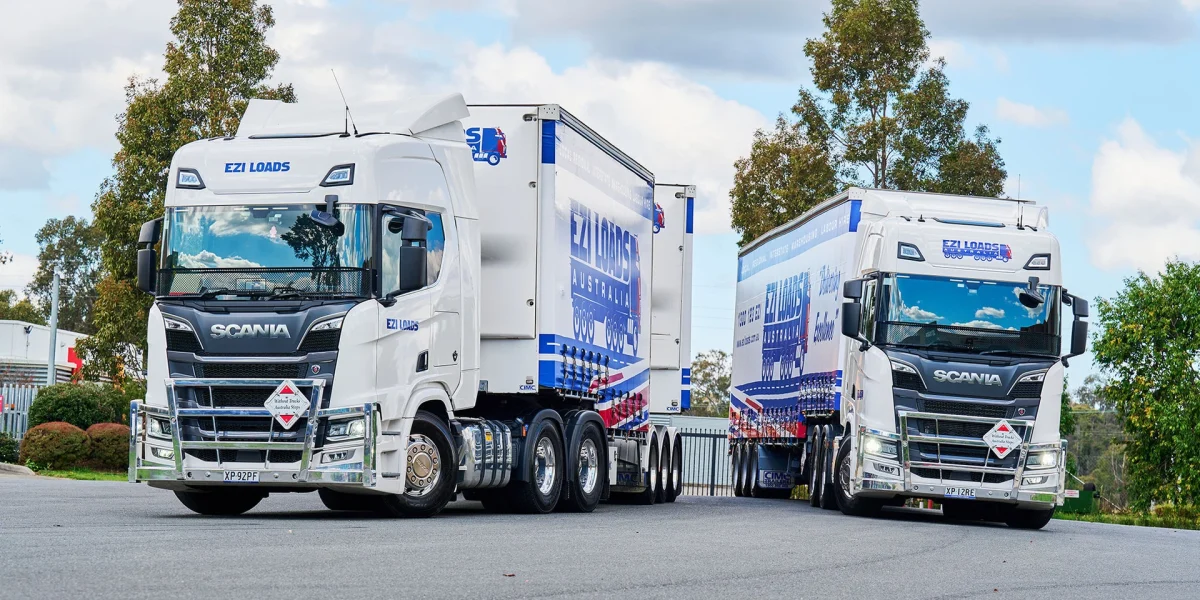
EZI Loads operates a fleet of more than 88 trucks and a team of over 200 staff, including drivers, supported by hubs in Sydney and Melbourne. The business provides local, regional and interstate transport services, as well as warehousing and storage solutions.
This operational capability supports a range of freight requirements. The right service will depend on the customer’s freight type, volume, route, delivery schedule and other operational needs.
Our Euro 6 standard trucks
EZI Loads operates a number of Euro 6 standard trucks as part of its fleet. The fleet also includes 12 newly acquired Scania 560R powered by Scania DC16 V8 Diesel Engine.
Euro 6 (also written Euro VI) is an emissions standard. Under Australia’s ADR 80/04, it sets stricter limits on harmful exhaust emissions. The Department of Infrastructure reports that, compared with Euro V, nitrogen oxide limits are 77 to 80 per cent lower and particulate limits are 50 to 66 per cent lower.
The emissions technology itself does not directly improve fuel efficiency. Manufacturers, however, have advised the government that their latest Euro VI engines can be up to 10 per cent more fuel efficient than earlier Euro V models. Real results depend on the truck, the load, the route, the driver and how the vehicle is maintained.
A modern fleet is part of operating responsibly and delivering a dependable service. Euro VI trucks are built to cleaner emissions standards, and engines of this type are designed with fuel efficiency in mind. For customers, that supports consistent, well-managed freight operations, which matters most when costs are under pressure.
How we work with customers
Transport planning for your requirements
Before arranging a freight service, it is important to understand what needs to move, where it needs to go and when it needs to arrive.
Discussing these details helps establish the appropriate transport requirements and identify any special handling, scheduling or delivery considerations.
Explore EZI Loads’ transport and logistics services to learn more about the available options.
Visibility and communication
Knowing the status of a shipment can help businesses coordinate their own operations and respond to delivery changes.
EZI Tracking provides customers with a track-and-trace service for freight movements. Clear communication about service requirements and agreed pricing arrangements is also important when market conditions change.
Learn more about EZI Loads and its approach to transport.
A transport partner that understands your business
Freight requirements can change as a business grows, adjusts production or serves new customers.
Reviewing your transport arrangements periodically can help ensure that your provider, service levels and pricing structure remain appropriate for your operation.
Reviewing your freight costs or planning a change in delivery requirements? Discuss your freight requirements with EZI Loads to talk through your transport needs.
Conclusion: Plan for Volatility With the Right Transport Partner
No business can control global fuel prices or geopolitical events. Businesses can make more informed decisions by understanding their freight charges, reviewing their transport arrangements and maintaining clear communication with their providers.
For manufacturers, wholesalers, distributors and other businesses that depend on road freight, the aim is not simply to find the lowest rate. It is to choose a service that meets delivery requirements, provides appropriate visibility and supports the operation over time.
EZI Loads is committed to supporting customers through changing conditions. If you are reviewing your freight arrangements or looking for a freight transport partner that understands your operational requirements, we would like to hear from you.
Looking for a freight transport partner that understands your operational requirements?
Talk to EZI Loads about your freight needs and discuss a solution suited to your business.